5 Reasons to Add the Chaitanya Bhagavata Book to Your Daily Reading
Most people who are serious about their spiritual lives maintain some form of daily reading practice. A chapter of the Bhagavad Gita before sunrise. A few pages of the Srimad Bhagavatam before bed. A verse or two from a devotional poet carried through the day like a quiet companion. These habits, small as they seem, are the invisible infrastructure of a genuinely spiritual life.
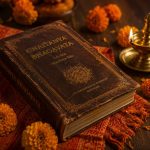
But there is one text that belongs on that daily reading list and is far too often overlooked — even by committed practitioners of the Vaishnava tradition. The Chaitanya Bhagavata book, composed by the great Vrindavana Dasa Thakura in the sixteenth century, is not merely a biography of Sri Chaitanya Mahaprabhu. It is a living transmission of devotional culture — raw, emotionally immediate, and stubbornly resistant to the kind of spiritual dryness that creeps into even the most sincere practice over time.
Here are five reasons why adding the Chaitanya Bhagavata to your daily reading is one of the most practical spiritual decisions you can make.
Reason 1 — It Connects You to the Original Atmosphere of the Sankirtan Movement
There is a difference between knowing about something and actually feeling it. You can read a hundred scholarly articles about the French Revolution and still have no real sense of what it was like to stand in the streets of Paris in 1789 — the noise, the fear, the electricity in the air, the sense that something irrevocable was happening.
The Chaitanya Bhagavata closes that gap. Vrindavana Dasa Thakura was not a distant historian reconstructing events from dry records. He was born into the innermost circle of Chaitanya’s movement — his mother Narayani was the niece of Srivasa Pandita, in whose courtyard the most intimate Sankirtan gatherings took place. The emotional atmosphere he absorbed from childhood, the stories he heard directly from eyewitnesses, the living memory of a community still vibrating with what it had experienced — all of this flows directly into the text.
When you read the Chaitanya Bhagavata, you are not reading about Sankirtan. You are, in a very real sense, being placed inside it. The sound of Chaitanya’s voice as he leads a kirtan through Nabadwip’s streets at midnight, the tears on devotees’ faces, the shock of those who encounter his ecstasy for the first time and find themselves inexplicably transformed — Vrindavana Dasa transmits all of this with a vividness that no secondhand account can replicate.
For practitioners who find their daily spiritual practice feeling routine or mechanical, this direct contact with the original atmosphere of the Sankirtan movement is genuinely renewing. It reminds you what the practice is actually supposed to feel like — and it makes the distance between where you are and where you want to be feel suddenly navigable.
Reason 2 — It Gives You Direct Access to Chaitanya’s Theology Through Story
The Chaitanya Bhagavata is often compared unfavorably to the Chaitanya Charitamrita on the grounds that Krishnadasa Kaviraja’s later work contains more elaborate theological exposition. This comparison misunderstands what the Chaitanya Bhagavata is doing — and what it uniquely offers.
Vrindavana Dasa Thakura teaches theology through narrative rather than through systematic analysis. The doctrines of the Gaudiya Vaishnava tradition — the nature of the divine name, the relationship between the individual soul and the Supreme, the meaning of devotional surrender, the transformative power of sadhu-sanga — are all present in the Chaitanya Bhagavata, but they are embedded in stories, conversations, and events rather than philosophical treatises.
This is not a limitation. For most people, in most stages of spiritual development, story is a more effective vehicle for genuine understanding than doctrine. You can read a philosophical argument about the power of the holy name and file it away as information. But when you read about Jagai and Madhai — two violent, dissolute men whose encounter with Nityananda Prabhu and the holy name transforms them within the space of a single episode — something happens that philosophical argument alone cannot accomplish. You do not merely understand the doctrine. You feel its truth.
Daily reading of the Chaitanya Bhagavata builds theological depth organically, through repeated immersion in narratively rich material. Over weeks and months, the doctrines of the tradition settle into the reader not as intellectual positions but as emotional convictions — which is exactly the level at which they need to operate to actually change how a person lives.
Reason 3 — It Teaches You How to Handle Spiritual Obstacles
Every sincere spiritual practitioner faces obstacles. There are periods when the practice feels dry and lifeless. There are people and circumstances that seem specifically designed to discourage devotion. There are internal voices — doubt, pride, distraction, self-criticism — that undermine the stability of spiritual commitment from the inside.
The Chaitanya Bhagavata is, among many other things, a detailed record of how Chaitanya and his associates handled every variety of obstacle imaginable — and the strategies, both practical and philosophical, that they brought to bear.
Consider the episode of Chand Kazi — the Muslim magistrate who banned public Sankirtan in Nabadwip. Chaitanya did not respond with private compliance, political maneuvering, or defensive withdrawal. He organized the largest Sankirtan procession the city had ever seen and walked directly toward the source of the opposition. The result was not confrontation but transformation — the Kazi’s heart opened, and the ban was lifted.
The lesson is not simply “be bold.” It is more nuanced than that. Chaitanya’s response was possible because his confidence was not in his own power or political capital but in the inherent potency of the divine name itself. When the practice is genuine, obstacles tend to dissolve — not always quickly, not always in the way expected, but with a consistency that the Chaitanya Bhagavata documents across episode after episode.
Daily reading of these episodes builds something that could be called spiritual confidence — not arrogance, but a deep, settled trust in the practice itself, grounded in the accumulated testimony of those who faced far greater obstacles than most modern practitioners will ever encounter.
Reason 4 — It Rehumanizes the Saints
One of the most spiritually deadening things that can happen to a practitioner is the gradual transformation of the great saints into remote, idealized figures — so perfect, so extraordinary, so beyond the reach of ordinary human experience that their example inspires awe but not emulation.
The Chaitanya Bhagavata works powerfully against this tendency. Vrindavana Dasa Thakura portrays the associates of Chaitanya with remarkable human specificity. Nityananda Prabhu is simultaneously the embodiment of divine mercy and a figure of boisterous, sometimes unpredictable energy — laughing, weeping, dancing, occasionally behaving in ways that confuse and unsettle conventional religious expectations. Advaita Acharya is profound and devoted but also capable of sharp, challenging speech. Even Chaitanya himself — particularly in his childhood and early youth — is portrayed with a playful, sometimes mischievous humanity that makes him utterly approachable.
This matters for daily spiritual life because it means the saints of the Chaitanya Bhagavata are companions, not monuments. When you read about Nityananda’s tears of compassion for the fallen, or Haridas Thakura’s serene persistence in the face of brutal opposition, or Srivasa Pandita’s courage in hosting Sankirtan gatherings despite social pressure and physical threat, you are reading about people — genuinely extraordinary people, but people whose choices were made in real circumstances under real pressure.
That realization transforms how you read their example. It is no longer: How beautiful — for someone like that. It becomes: This was a choice. This is a path. This is available.
Reason 5 — It Activates the Transformative Power of Hearing
The Srimad Bhagavatam identifies shravana — hearing — as the first and most fundamental practice of devotion in Kali Yuga. Before chanting, before remembering, before all other forms of devotional engagement, hearing comes first. And the Chaitanya Bhagavata is, in the most profound sense, a text specifically constructed to be heard — not merely read.
Vrindavana Dasa Thakura’s Bengali is rhythmic, musical, and emotionally direct. The text was composed to be recited aloud, sung, and shared in community — and even in translation, even in silent reading, something of that original oral quality comes through. The sentences have a momentum to them. The episodes build toward emotional and theological peaks in ways that feel almost musical. The text breathes.
When you read the Chaitanya Bhagavata daily, you are not just absorbing information or accumulating spiritual merit in some abstract sense. You are participating in an act of shravana — the specific practice that the tradition identifies as most powerful for this age. You are hearing, again and again, about the nature of divine love, the potency of the holy name, and the lives of those who embodied both.
The tradition is consistent and emphatic on this point: repeated, attentive hearing of such material gradually purifies the consciousness in ways that are real but not always immediately visible — the way regular watering gradually transforms a dry seed into a living plant. The transformation is not dramatic day by day. But one day you look up and something has changed — in how you respond to difficulty, in what you find yourself longing for, in how the holy name sounds when you chant it.
That is what daily reading of the Chaitanya Bhagavata does. Not overnight. Not through any single reading. But cumulatively, reliably, over time — exactly as the tradition promises.
A Final Word: Start Small, Start Today
If you have never read the Chaitanya Bhagavata, the prospect of beginning can feel daunting. It is a large text, composed in a cultural and linguistic context quite different from the modern world, full of names, places, and theological concepts that may initially feel unfamiliar.
The answer to this is simple: start small. Ten minutes a day. One episode at a time. Read slowly, without pressure to cover ground quickly. Allow the text to work on you at its own pace rather than demanding that you work through it at yours.
The Chaitanya Bhagavata does not require you to be qualified, prepared, or already advanced in your spiritual practice. It only requires that you come to it sincerely — with an open mind, a willing heart, and the modest commitment of ten minutes each morning or evening set aside from the noise of the day.
Vrindavana Dasa Thakura wrote this text for you. He wrote it knowing that the people who would most need it would be people exactly like us — living in an age of distraction and spiritual hunger, longing for something real, not sure where to find it.
It is here. It has been waiting five hundred years.
Open it. Read one page. See what happens.