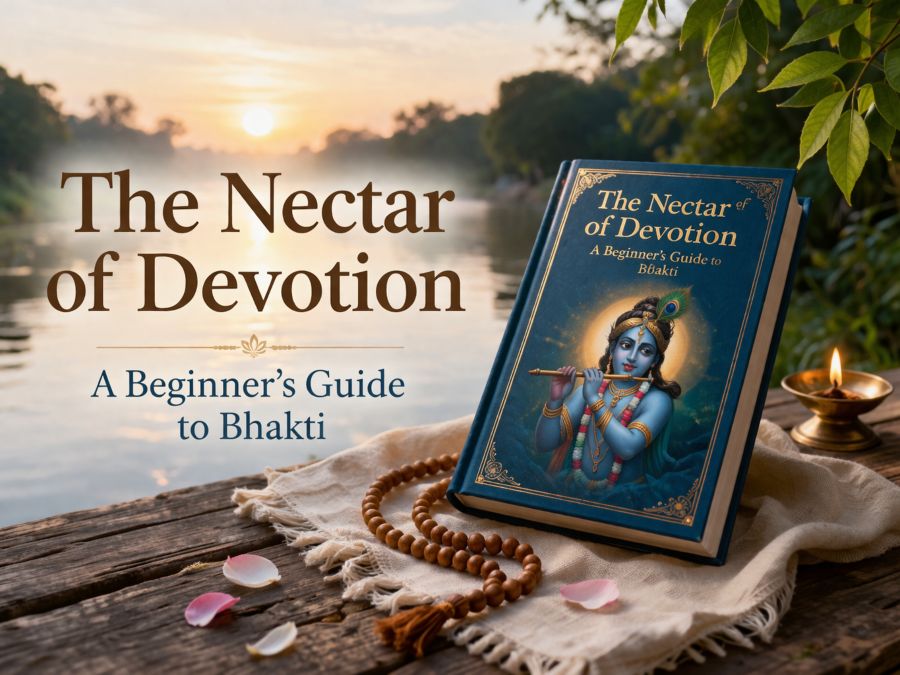
A Simple Introduction to the Nectar of Devotion
For readers who want to understand the heart of bhakti in a clear and meaningful way, Krishna Book at Nectar of Devotion serves as a helpful doorway into the wider world of Krishna-centered spiritual literature. Among the most respected devotional texts in the Gaudiya Vaishnava tradition, The Nectar of Devotion explains how pure love for Krishna develops, how devotional service transforms the heart, and why bhakti is considered the highest path of spiritual realization. It is a book of deep theology, but it is also a practical guide for anyone who wants to move from theory to genuine spiritual feeling.
Many spiritual books discuss liberation, morality, meditation, or self-discipline, but The Nectar of Devotion focuses on something even more intimate: the science of loving God. It teaches that devotion is not sentiment, ritual, or cultural identity alone. It is the soul’s natural function. When awakened properly, devotion becomes the source of peace, purpose, joy, and inner stability. This is why the book remains so important for both beginners and serious practitioners.
This article offers a simple introduction to The Nectar of Devotion, its meaning, structure, teachings, and relevance for modern readers. Whether you are completely new to bhakti literature or looking for a stronger foundation in devotional philosophy, this guide will help you understand why this text continues to inspire spiritual seekers across the world.
What Is The Nectar of Devotion?
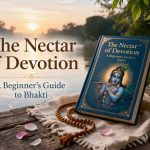
The Nectar of Devotion is a devotional classic that presents the science of bhakti in an organized, accessible, and spiritually rich manner. It is based on Bhakti-rasamrita-sindhu, the Sanskrit work of Srila Rupa Goswami, one of the foremost teachers in the Gaudiya Vaishnava lineage. The book explains what devotion is, how it begins, how it grows, what nourishes it, what weakens it, and how it reaches its highest perfection in pure love for Krishna.
The word “nectar” suggests something sweet, life-giving, and spiritually sustaining. The title itself indicates that devotion is not dry duty or emotional pressure. It is the most beautiful and fulfilling engagement of the soul. To read this book is to enter a tradition where loving service to Krishna is understood not merely as religion, but as the deepest expression of spiritual truth.
What makes The Nectar of Devotion so valuable is its balance. It is philosophical without becoming cold. It is devotional without becoming vague. It explains principles clearly while also preserving the emotional and relational beauty of bhakti. This makes it especially useful for readers who want more than inspiration. It offers a spiritual framework that can actually guide one’s life.
Why This Book Matters in Bhakti Tradition
Within the bhakti tradition, The Nectar of Devotion is valued because it gives structure to spiritual life. Many people feel attraction to Krishna, chanting, kirtan, or devotional culture, but they do not always understand how devotion develops in a steady and authentic way. This book fills that gap.
It teaches that devotion is both a gift and a discipline. Grace is essential, but so is sincere practice. Bhakti is not accidental. It flourishes through hearing, chanting, remembering Krishna, serving Him, keeping saintly association, avoiding harmful habits, and cultivating the right inner mood.
Why readers value this text:
- It explains devotion step by step.
- It connects practice with philosophy.
- It helps distinguish real bhakti from imitation.
- It shows how emotions become spiritually purified.
- It presents love of Krishna as the highest goal of life.
Because of this, the book is often studied by devotees who want a solid foundation. It does not merely encourage faith. It educates faith. It helps transform spiritual attraction into mature devotional understanding.
The Meaning of Devotion in This Text
One of the most beautiful aspects of The Nectar of Devotion is that it defines devotion in a complete and elevated way. In ordinary language, devotion can mean loyalty, affection, admiration, or religious practice. In this text, however, devotion has a much deeper meaning.
Bhakti is loving service offered to Krishna with sincerity and without selfish motive. It is not done for material gain, social respectability, or liberation from suffering alone. True devotion is centered on pleasing Krishna. This principle changes everything. It shifts the spiritual path from self-centered desire to loving reciprocation.
Core qualities of true devotion:
- It is favorable to Krishna.
- It is free from selfish ambition.
- It is not covered by dry speculation or ego-driven action.
- It engages the senses in divine service.
- It awakens the soul’s natural relationship with God.
This vision of devotion is powerful because it is both simple and profound. A person does not need to become socially perfect, intellectually elite, or materially successful to begin bhakti. What is required is sincerity, humility, and willingness to engage in devotional service.
The Structure of Devotional Growth
A key strength of The Nectar of Devotion is that it explains spiritual growth as a real process. This is deeply encouraging for readers. Many people assume that spiritual life should produce immediate purity or instant emotional intensity. When that does not happen, they become discouraged. This book shows that devotion grows through stages.
The beginning may come through curiosity, faith, or contact with devotees. Then comes practice, purification, steadiness, taste, attachment, and eventually love of God. This gradual unfolding makes the path realistic and compassionate.
The journey of bhakti generally includes:
- Initial faith
- Association with devotees
- Regular devotional practice
- Removal of unwanted habits and confusion
- Increasing steadiness
- Genuine spiritual taste
- Deep attachment to Krishna
- Pure love of God
This progression matters because it helps readers understand their own inner life. Struggles do not always mean failure. Restlessness does not mean bhakti is absent. Often, it means the process is working. The soul is being refined. This makes The Nectar of Devotion not just a theological text, but a source of encouragement.
Rules, Practice, and the Heart of Bhakti
Some readers become nervous when they hear that bhakti includes discipline, rules, or regulated practice. They may fear that devotion will become mechanical. The Nectar of Devotion addresses this concern beautifully. It shows that discipline is not the enemy of love. Proper practice protects and nourishes love.
Regulated devotion helps train the mind, purify the senses, and focus the heart. By hearing about Krishna, chanting His holy names, worshiping, praying, and associating with advanced devotees, one gradually develops genuine attraction. What begins as discipline becomes delight.
Regulated bhakti helps a practitioner:
- Develop steadiness
- Avoid distraction
- Build spiritual habits
- Purify material desires
- Create a daily connection with Krishna
This is one of the most practical teachings of the book. Spiritual feeling does not usually appear at random. It is cultivated through repeated, sincere engagement. The practices of bhakti are not meant to imprison the heart. They are meant to free it from lower influences.
The Role of Association in Devotional Life
Another major theme in The Nectar of Devotion is the importance of association. Spiritual life is not meant to be lived in isolation. The company one keeps has tremendous influence on consciousness, desire, and direction.
Association with devotees strengthens faith, clarifies understanding, and protects one from doubt and distraction. It also offers living examples of bhakti in action. A reader may understand philosophy in theory, but by seeing devotion lived with sincerity, the heart becomes inspired in a different way.
Benefits of saintly association:
- Stronger conviction in spiritual practice
- Greater clarity about devotional principles
- Protection from discouragement
- Inspiration through example
- Deeper appreciation for Krishna-centered life
The text also warns against unfavorable association. Negative company, excessive materialism, cynical attitudes, and spiritually careless habits can weaken devotion. This is not about judging others harshly. It is about recognizing that consciousness is shaped by environment. To protect devotion, one must choose uplifting association wisely.
Obstacles on the Path of Bhakti
A realistic spiritual book does not pretend that the path is effortless. The Nectar of Devotion is spiritually uplifting, but it is also honest. It identifies obstacles that can weaken or distort devotional life.
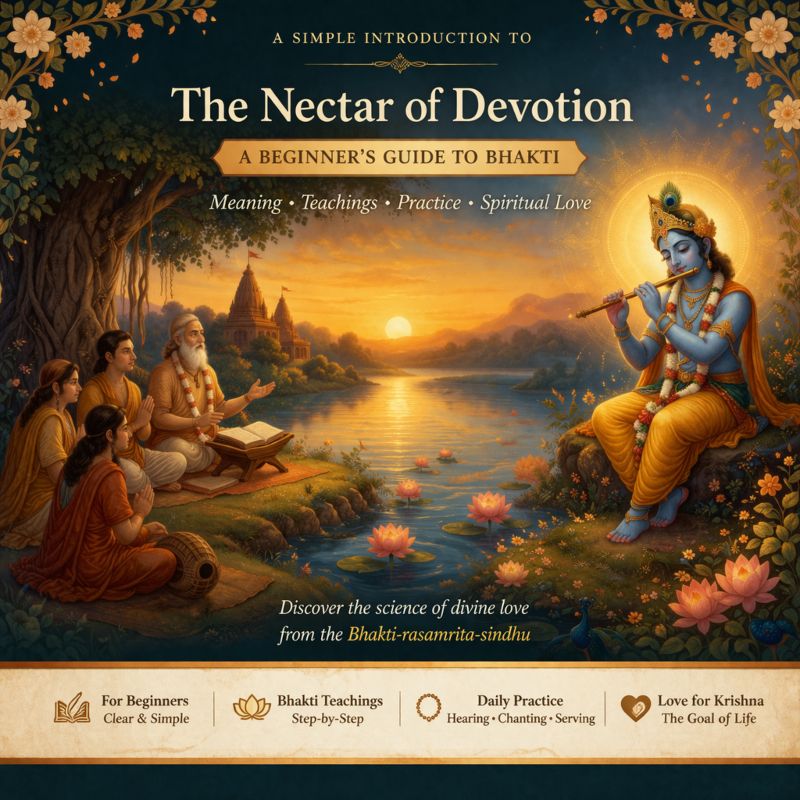
Some of these obstacles are external, such as bad influence or excessive worldliness. Others are internal, such as pride, impatience, superficiality, offense, or the desire to use spirituality for selfish ends. This honesty is one reason the book remains so useful.
Common obstacles it helps readers identify:
- Spiritual laziness
- Desire for prestige
- Mechanical practice
- Impatience for quick results
- Offenses toward devotees or sacred practices
- Attachment to material enjoyment
- Lack of sincerity
By naming these obstacles, the book does not create fear. It creates awareness. Once a practitioner can identify what weakens devotion, the path becomes clearer. Bhakti is not destroyed by imperfection alone. It is weakened more by carelessness than by honest struggle.
The Sweetness of Krishna-Centered Devotion
While The Nectar of Devotion is systematic and instructional, it is not dry. In fact, one of its most attractive features is its emphasis on spiritual sweetness. Devotion is not only duty. It is relationship. Krishna is not approached as a distant force but as the all-attractive Lord who reciprocates with love.
This relational dimension is what gives bhakti its warmth. Devotees serve Krishna as master, friend, child, beloved, and the supreme object of affection. These devotional moods reveal that spiritual perfection is deeply personal.
Krishna-centered devotion includes:
- Reverence for the Lord
- Loving remembrance
- Emotional intimacy in purified form
- Joyful service
- Personal attachment to Krishna’s name, form, qualities, and pastimes
This is where The Nectar of Devotion becomes especially meaningful for readers who want to understand the emotional richness of bhakti. It explains that divine love is not abstract. It is relational, living, and ever-expanding.
The Difference Between Material Emotion and Spiritual Emotion
A particularly important teaching in The Nectar of Devotion is the distinction between material feeling and spiritual feeling. This matters because devotion can easily be misunderstood as emotional excitement alone.
Material emotion often centers on the self. It wants possession, recognition, comfort, or control. Spiritual emotion, by contrast, becomes purified through service and absorption in Krishna. It is not based on ego. It is based on love.
Spiritual emotion in bhakti is marked by:
- Selflessness
- Purity of intention
- Deep remembrance of Krishna
- Humility
- Joy in service
- Freedom from exploitation
This distinction protects readers from sentimental misunderstanding. Bhakti does include feeling, but not unstable or self-centered feeling. It includes awakened spiritual emotion that flows from purified consciousness.
How the Book Helps Modern Readers
Even though The Nectar of Devotion comes from a traditional spiritual lineage, its teachings are extremely relevant today. Modern life often leaves people mentally overloaded, emotionally fragmented, and spiritually undernourished. Many are surrounded by endless stimulation but very little inner depth.
This book offers a different center of life. It teaches that fulfillment comes not from consuming more, controlling more, or displaying more, but from reconnecting the soul with Krishna through loving service.
Why modern readers connect with it:
- It gives a clear spiritual path.
- It addresses inner emptiness.
- It offers a personal conception of God.
- It transforms faith into practice.
- It replaces confusion with devotional direction.
In a world of constant distraction, The Nectar of Devotion invites steadiness. In a culture of self-promotion, it teaches humility. In a climate of emotional exhaustion, it points toward divine love as the soul’s natural nourishment.
Practical Lessons Readers Can Apply
One reason this book has lasting value is that it offers principles that can be lived. A reader does not need to remain at the level of admiration. The teachings can shape daily life.
Practical ways readers can apply its message:
- Set aside time daily for hearing and chanting.
- Read devotional literature regularly.
- Choose uplifting association.
- Serve with humility rather than ego.
- Avoid habits that disturb the mind.
- Reflect on how to please Krishna in everyday actions.
- Stay patient with the gradual nature of growth.
These practical lessons help bridge the gap between philosophy and habit. Spiritual life becomes more than an idea. It becomes a daily orientation.
Who Should Read The Nectar of Devotion?
This book is suitable for a wide range of readers. Beginners can benefit from its clear definitions and organized presentation. Practicing devotees can use it to deepen understanding and refine practice. Teachers and spiritual writers can draw from it for philosophical clarity and devotional insight.
It is especially valuable for:
- Readers new to bhakti
- Devotees seeking stronger foundations
- Students of Krishna consciousness
- Spiritual seekers exploring personal theism
- Anyone interested in the science of divine love
The book is not meant only for scholars or renunciants. Its truths are universal because the longing to love and be connected belongs to every soul.
Why It Continues to Inspire Across Generations
There are many religious books in the world, but very few explain devotion with such precision and beauty. The Nectar of Devotion continues to inspire because it speaks to something timeless in the human heart. People long for meaning, relationship, and spiritual depth. This text answers that longing by showing that pure love for Krishna is both the path and the destination.
Its teachings remain relevant because they are not bound to one historical mood or cultural trend. The outer world changes, but the soul’s need for devotion does not. This is why the book continues to be studied, quoted, taught, and cherished.
Its lasting appeal comes from:
- Timeless spiritual truths
- Clear devotional structure
- Emotional and philosophical depth
- Practical relevance
- A beautiful presentation of Krishna-centered life
Conclusion
A Simple Introduction to the Nectar of Devotion reveals why this classic text is so beloved in the bhakti tradition. It is not merely a book about religion, discipline, or emotional spirituality. It is a guide to the soul’s deepest potential. It explains how devotion begins, how it grows, what strengthens it, what endangers it, and how it culminates in pure love for Krishna.
For anyone seeking clarity on the path of bhakti, The Nectar of Devotion offers a foundation that is both profound and approachable. It teaches that devotion is not artificial. It is the natural awakening of the heart when life is centered on Krishna. Through sincere practice, good association, spiritual discipline, and divine grace, devotion matures into something sweet, stable, and transformative.