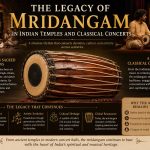
Mridangam in Indian Temples and Classical Concerts
There is a certain kind of silence that exists inside old Indian temples just moments before music begins. Oil lamps flicker against ancient stone walls. Devotees settle into stillness. Priests move rhythmically through ritual. Then suddenly, a deep resonant beat rises into the air — steady, warm, commanding.
The atmosphere changes instantly.
That sound often belongs to the Mridangam.
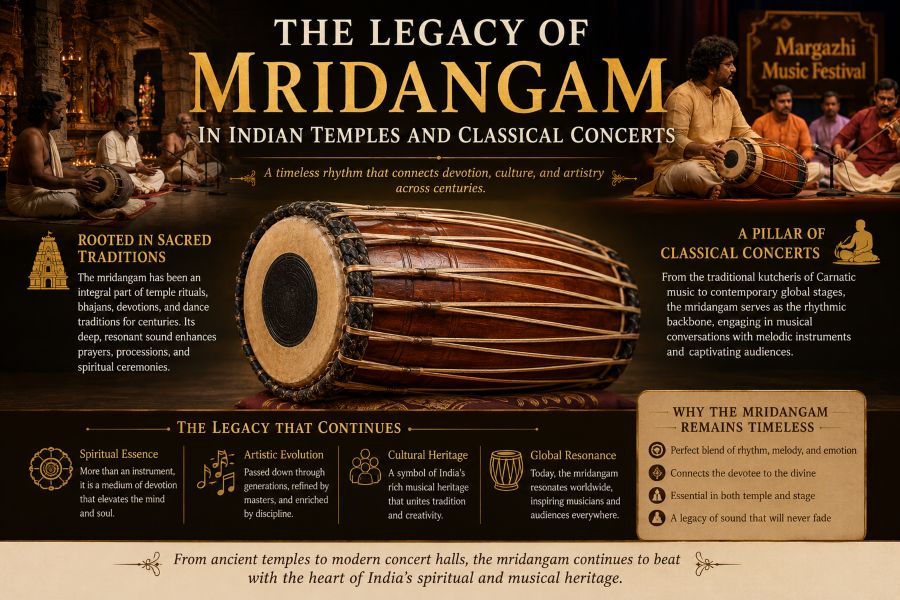
For centuries, the Mridangam has existed far beyond the role of a musical instrument. It has acted as a spiritual companion, a rhythmic guide for devotional expression, and later, one of the defining voices of Indian classical concerts. Its journey through temple traditions and concert halls reveals something fascinating about Indian culture itself: rhythm was never treated as entertainment alone. It was treated as energy, discipline, prayer, and emotional architecture.
Even today, whether heard in a sacred temple courtyard or a prestigious Carnatic music festival, the Mridangam carries a presence that feels timeless.
And that legacy continues through institutions, artists, and cultural spaces that preserve traditional music, including platforms like Mayapur Store, where classical instruments remain connected to devotional and cultural heritage.
Before Concert Halls, There Were Temples
Long before modern auditoriums existed, Indian temples served as major centers for artistic life.
Music was not separated from spirituality.
Dance, chanting, percussion, and vocal traditions all existed within temple culture as forms of offering rather than performance in the modern commercial sense.
The Mridangam naturally became part of this world because rhythm played an essential role in ritual timing and devotional atmosphere.
Temple music traditions required instruments that could:
- Support chanting
- Guide devotional singing
- Maintain rhythmic cycles
- Energize ceremonies
- Accompany sacred dance traditions
The Mridangam fulfilled all of these roles beautifully.
Its tonal depth carried naturally through stone temple architecture, creating an immersive sonic environment that amplified spiritual emotion.
Why the Mridangam Felt Perfect for Sacred Spaces
Not every instrument creates the same emotional response inside a temple environment.
The Mridangam possesses unique qualities that make it especially suited for devotional settings.
Its sound feels grounded.
Unlike overly sharp percussion instruments that dominate space aggressively, the Mridangam balances strength with warmth. The bass tones resonate physically through the body, while the sharper strokes create clarity without harshness.
This tonal balance supports concentration rather than distraction.
That matters deeply in spiritual traditions where music is intended to elevate awareness instead of overwhelming the senses.
Many temple musicians historically viewed rhythm not simply as accompaniment, but as a structured pathway toward mental focus and devotional immersion.
The repetitive cycles of percussion helped synchronize collective attention during worship.
The Instrument Became Part of Ritual Life
In many South Indian traditions, the Mridangam eventually became woven into daily ritual structures.
It accompanied:
- Bhajans
- Temple processions
- Devotional dance
- Sacred storytelling
- Festival celebrations
- Ritual singing traditions
The instrument helped regulate both movement and emotion.
A slower rhythmic cycle could create meditative stillness. Faster patterns could generate devotional excitement during festivals or collective chanting.
This emotional flexibility gave the Mridangam enormous cultural importance.
It could whisper during intimate prayer or command attention during large public gatherings.
Very few percussion instruments balance those extremes so naturally.
Bharatanatyam and the Temple Connection
The history of the Mridangam cannot be separated from Bharatanatyam.
Before becoming a globally recognized classical dance form, Bharatanatyam existed primarily within temple traditions through devadasi performance culture.
The relationship between dancer and percussionist was extraordinarily intimate.
The Mridangam did more than maintain rhythm. It interacted with movement directly.
Every:
- Footstep
- Gesture
- Pause
- Emotional shift
- Dramatic transition
received rhythmic reinforcement.
This close relationship trained percussionists to become emotionally sensitive performers rather than mechanical timekeepers.
That artistic philosophy still shapes Carnatic percussion today.
Ancient Acoustic Intelligence Hidden Inside the Instrument
One remarkable aspect of the Mridangam legacy is how advanced its acoustic design became centuries before modern sound engineering existed.
The famous black tuning patch placed at the center of the drumhead was not invented randomly.
Traditional craftsmen discovered, through generations of experimentation, how additional weighted layering could stabilize pitch and enrich harmonics.
The result?
A percussion instrument capable of producing musical resonance instead of uncontrolled noise.
This mattered enormously inside temples where tonal beauty carried spiritual significance.
The instrument needed to sound refined, balanced, and emotionally resonant — not merely loud.
Modern acoustic researchers continue admiring how sophisticated these traditional construction methods truly are.
From Temple Courtyards to Classical Concert Stages
As Carnatic music evolved into a formal concert tradition, the Mridangam naturally moved with it.
But something important changed.
Inside temple culture, the instrument primarily served devotional and ritual functions.
Inside classical concerts, it entered a more intellectually demanding environment.
Now the percussionist had to:
- Follow advanced improvisation
- Navigate complex tala systems
- Interact with melodic virtuosity
- Create mathematical rhythmic structures
- Support dynamic concert pacing
This transformation elevated the role of the Mridangam artist dramatically.
The percussionist was no longer viewed merely as accompaniment.
They became a co-creator of the musical experience.
The Rise of Legendary Mridangam Masters
Over time, certain percussionists became iconic figures within Carnatic music.
Audiences attended concerts specifically to hear their rhythmic artistry.
This was a major cultural shift.
The Mridangam moved from supporting role to artistic centerpiece.
Legendary artists developed styles known for qualities such as:
- Tonal beauty
- Mathematical precision
- Emotional subtlety
- Thunderous energy
- Conversational improvisation
Each master shaped the tradition differently.
Some emphasized restraint and tonal elegance. Others pushed rhythmic complexity to astonishing levels.
Together, they expanded what audiences believed percussion could achieve emotionally and intellectually.
The Tani Avartanam Changed Audience Expectations
One of the defining moments in a Carnatic concert is the tani avartanam — the percussion solo section.
To newcomers, it may initially seem technical.
Experienced listeners know better.
A great tani avartanam feels dramatic, suspenseful, and emotionally charged.
The percussionist gradually builds rhythmic tension before resolving patterns perfectly into the tala cycle.
The excitement comes from anticipation.
Listeners may not consciously calculate the mathematics happening underneath, yet they feel the satisfaction instinctively when the resolution arrives.
This ability to combine intellect with emotional impact became one of the defining strengths of the Mridangam tradition.
Why the Mridangam Still Feels Spiritual Inside Concert Halls
Interestingly, even in formal classical concerts, the Mridangam often retains a devotional atmosphere.
Part of this comes from the structure of Carnatic music itself, which remains deeply connected to devotional compositions and spiritual themes.
But another reason lies in the instrument’s tonal character.
The resonance feels organic and human.
Unlike digitally processed percussion sounds, the Mridangam breathes naturally. Tiny tonal variations create warmth and unpredictability that listeners experience emotionally.
That quality helps preserve the sacred emotional depth inherited from temple traditions.
Even highly technical performances rarely feel emotionally cold.
The Relationship Between Rhythm and Meditation
Many traditional Indian philosophies viewed rhythm as more than entertainment.
Repetitive rhythmic cycles were believed to influence:
- Concentration
- Breath awareness
- Emotional regulation
- Mental focus
The Mridangam played an important role in this understanding.
Steady tala cycles create psychological grounding. Repetition sharpens attention. Rhythmic immersion can quiet mental distraction.
This meditative dimension explains why percussion remains central to many devotional traditions even today.
The instrument supports inner stillness while simultaneously generating movement and energy.
That balance is rare.
Temple Architecture Amplified the Sound Beautifully
Ancient Indian temples were not acoustically accidental spaces.
Many temple structures naturally amplified resonance through stone surfaces, open courtyards, and architectural geometry.
The Mridangam interacted beautifully with these environments.
Bass frequencies traveled richly through temple halls, while sharper strokes remained clear without excessive echo.
This natural acoustic partnership strengthened the instrument’s role inside sacred spaces.
Even today, hearing live percussion inside an old temple creates an experience modern speaker systems rarely replicate fully.
The sound feels physical and immersive in a deeply human way.
The Instrument Became a Cultural Memory Keeper
One reason the Mridangam legacy remains powerful is because it carries inherited memory.
Generations of:
- Temple musicians
- Dance accompanists
- Carnatic performers
- Spiritual practitioners
- Percussion teachers
have shaped its identity continuously.
Each rhythmic phrase carries traces of older traditions passed orally through teaching lineages.
Unlike modern music cultures driven heavily by short-term trends, the Mridangam evolved slowly through continuity.
That continuity creates depth.
When listeners hear the instrument today, they are also hearing centuries of accumulated musical intelligence.
The Craftsmanship Tradition Deserves Equal Respect
The legacy of the Mridangam belongs not only to performers but also to instrument makers.
Great craftsmen spend years learning:
- Wood selection
- Skin preparation
- Shell shaping
- Tuning balance
- Harmonic control
Tiny adjustments dramatically affect sound behavior.
Some artisans become legendary among musicians because their instruments possess unusually rich tonal personality.
This relationship between musician and craftsman remains central to preserving authentic sound quality.
Without skilled builders, the tradition itself weakens over time.
Modern Concerts Still Depend on Ancient Principles
Even in large modern auditoriums equipped with microphones and digital sound systems, the core principles of Mridangam performance remain ancient.
The player still relies on:
- Finger sensitivity
- Hand pressure
- Rhythmic intuition
- Tala discipline
- Tonal balance
Technology may amplify sound, but it cannot replace musical touch.
That is why audiences still react emotionally to live percussion performance despite endless digital entertainment options.
Authentic rhythm remains deeply human.
Younger Generations Are Rediscovering the Tradition
One encouraging development is the growing interest among younger musicians.
Many students are rediscovering the Mridangam through:
- Online performances
- Music academies
- Cultural festivals
- Fusion collaborations
- Devotional music communities
This revival matters because traditions survive only when younger generations participate actively rather than observing passively.
Modern artists are also experimenting carefully with new musical contexts while preserving traditional rhythmic foundations.
That balance between innovation and continuity keeps the legacy alive.
Why the Mridangam Still Matters Today
Some people assume classical percussion belongs only to history or elite cultural spaces.
That assumption misses something important.
The Mridangam still matters because human beings continue responding deeply to rhythm.
Not superficial rhythm alone.
Meaningful rhythm.
The instrument teaches:
- Attention
- Discipline
- Listening
- Emotional control
- Collective coordination
These qualities remain valuable in every generation.
The legacy survives not because the instrument is old, but because it continues affecting people powerfully in the present.
The Real Legacy Is Bigger Than Music
The true legacy of the Mridangam extends beyond technical performance.
It represents a cultural philosophy where rhythm connects:
- Spirituality
- Mathematics
- Emotion
- Community
- Discipline
- Artistic expression
Inside temples, it supported devotion.
Inside concert halls, it elevated artistic conversation.
Across centuries, it adapted without losing identity.
That is rare for any artistic tradition.
Final Thoughts
The story of the Mridangam is really the story of continuity.
An instrument born within sacred and cultural traditions gradually evolved into one of the most respected voices in Indian classical music while still preserving its spiritual depth.
Its rhythms once echoed through temple corridors beside oil lamps and devotional chants. Today, those same rhythmic principles continue thrilling audiences inside prestigious concert halls across the world.
And despite changing technology, modern entertainment, and shifting cultural trends, the Mridangam still carries something ancient and unmistakably human:
The ability to transform rhythm into emotion, devotion, memory, and collective experience all at once.